Loading...
Serving Port Orange, FL and surrounding areas. (386) 400-1327
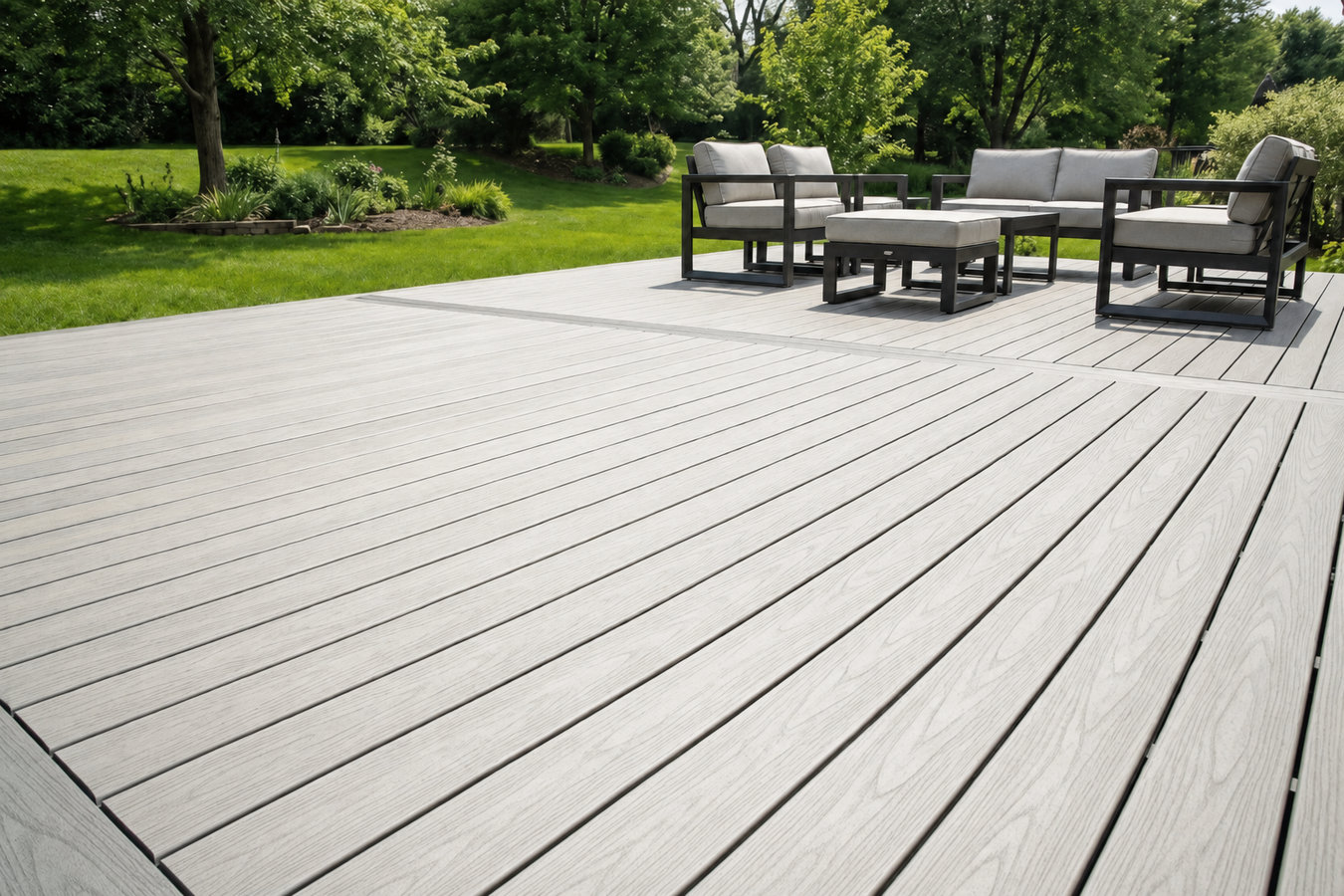
Florida humidity destroys wood decks within years. A Trex composite deck gives you an outdoor living space that holds up in Port Orange's heat, rain, and hurricane season - without the yearly maintenance bill.
Trex deck installation in Port Orange means building a structural frame from pressure-treated lumber and laying composite boards on top - most residential jobs take two to five days of construction, with a permit review period of one to three weeks before work begins.
Trex is a brand of composite decking made from wood fibers and recycled plastic. Unlike traditional lumber, it will not splinter, rot, or need annual staining - which makes it especially practical in Port Orange's subtropical climate, where high humidity and intense UV exposure break down wood decks faster than most homeowners expect. If you are still comparing materials, our composite deck installation page covers the broader range of composite options available.
Port Orange's housing stock runs heavily toward homes built between the 1970s and 1990s, many of which have aging wood decks or no deck at all. A Trex installation gives you a finished outdoor space that will look and feel the same a decade from now as it does on day one - without the seasonal refinishing routine that wood requires.
Walk your deck and press down firmly in several spots, especially near the ledger board where it meets the house. If any area feels spongy or gives more than it should, that is rot working through the wood. In Port Orange's humidity, this process moves faster than most homeowners expect - surface discoloration one year can become a structural problem the next.
Wood boards that have been through several Florida summers often start to cup at the edges or bow in the middle. This happens because wood absorbs moisture unevenly in high-humidity conditions. Beyond looking bad, warped boards create tripping hazards and gaps where water can pool and accelerate the decay underneath.
If you have had your wood deck refinished more than once and it still looks weathered within a season, the wood itself may be too far gone for surface treatments. At that point, the cost of repeated maintenance often exceeds what a composite replacement would have cost over the same period.
Many Port Orange homes built in the 1980s and 1990s have a basic concrete slab out back but no real outdoor living area. If you want to spend more time outside - especially during the cooler months from October through April - a new deck is the most direct way to create that space.
Our Trex deck installation service covers the full project - from permit application through final walkthrough. That includes setting concrete footings sized for Port Orange's coastal soil, building the structural frame, and installing the composite boards with proper spacing and hidden or screw fasteners. If you want a more budget-friendly wood option alongside your research, our pressure-treated wood deck construction page is a useful comparison.
Trex offers several product lines at different price points - from entry-level boards to premium grooved-edge options that use hidden fasteners for a cleaner look. We help you pick the line that fits your budget and your expectations for the finished surface. Railing systems, stair stringers, and any built-in features like benches or planters are designed as part of the deck rather than added on afterward, which is how you end up with a finished result that looks intentional instead of assembled.
Best for homeowners who want durable composite decking at a clear price point - solid color boards installed with face screws over a pressure-treated frame.
Best for homeowners who want a clean, seamless surface with no visible hardware - boards slot into hidden clips for a finished, polished look.
Best for elevated decks or homes where the railing is a visible part of the design - Trex railing systems match the board line and are built to the same maintenance-free standard.
Best for homes where the deck transitions to a yard or pool area - stair stringers and landing pads are framed and finished as part of the original build.
Port Orange sits in Volusia County, where average humidity stays above 70% for most of the year and summer temperatures regularly push into the low 90s. That combination of heat, moisture, and intense UV exposure is exactly what composite decking was designed for. Florida's hurricane season also runs June through November, and decks here are required to meet stricter wind-load standards than you would find in most other states - which means the framing underneath your Trex boards matters just as much as the boards themselves. We serve homeowners throughout the Port Orange area and frequently build in Flagler Beach, where similar coastal conditions apply.
A significant share of Port Orange neighborhoods - including many subdivisions along the Spruce Creek corridor - are governed by HOAs with rules about deck materials, colors, and railing styles. Composite decking's consistent, fade-stable appearance tends to sail through HOA review more easily than weathered wood, which grays unevenly and can attract violation notices over time. Getting your HOA approval and your city permit in place before construction starts is a step we walk every client through before a board goes down.
When you reach out, we ask about the approximate size you are imagining, whether it attaches to your home, and whether you have HOA rules to consider. We schedule a free on-site estimate and give you a written quote that breaks down labor, materials, and permit fees separately.
Once you approve the design and sign a contract, we submit the permit application to the City of Port Orange's Building Division. Permit approval typically takes one to three weeks. No work begins until the permit is in hand - that is non-negotiable.
The structural frame goes up first. We dig concrete footings sized for Port Orange's sandy soil, set the posts, and build the beam and joist system. This phase is the most critical - the framing has to be level, square, and anchored correctly.
Once the frame passes its first inspection, the composite boards go down, followed by railings and stairs. We schedule the final city inspection, walk you through the finished deck, and leave you with permit and warranty documentation.
We respond within one business day. No obligation, no sales pressure - just a straight answer and a written estimate.
(386) 400-1327Port Orange sits on coastal sandy soil that does not carry load the way denser inland soil does. We size our footings specifically for these conditions so your deck stays level and solid - not something that shifts or bounces within a few years.
We handle the entire permit process with Port Orange's Building Division, including drawings, inspections, and closeout. You get a clean permit record, which matters when you sell your home or need to file an insurance claim.
A large share of Port Orange neighborhoods have active HOA boards with rules about deck size, color, and railing style. We ask about your HOA requirements before finalizing your design so you are not making expensive changes after construction ends.
Standard fasteners rust quickly in Port Orange's humid, salt-air environment. Every deck we build uses hardware and connectors rated for outdoor coastal use - because the framing you cannot see matters just as much as the boards you can.
Every one of these points comes back to the same idea: a deck that is built right the first time costs less to own over the long run. You can learn more about NADRA's construction standards and what they mean for your project, or verify any Florida contractor's license directly on the DBPR license lookup.
A solid, more affordable alternative to composite - pressure-treated lumber built to Florida code with proper drainage and hardware for coastal conditions.
Learn MoreExplore the full range of composite decking brands and product lines available for Port Orange homeowners looking for low-maintenance outdoor surfaces.
Learn MoreSpring contractor schedules fill fast - reach out now to lock in your project date and get a written estimate before slots close.