Loading...
Serving Port Orange, FL and surrounding areas. (386) 400-1327
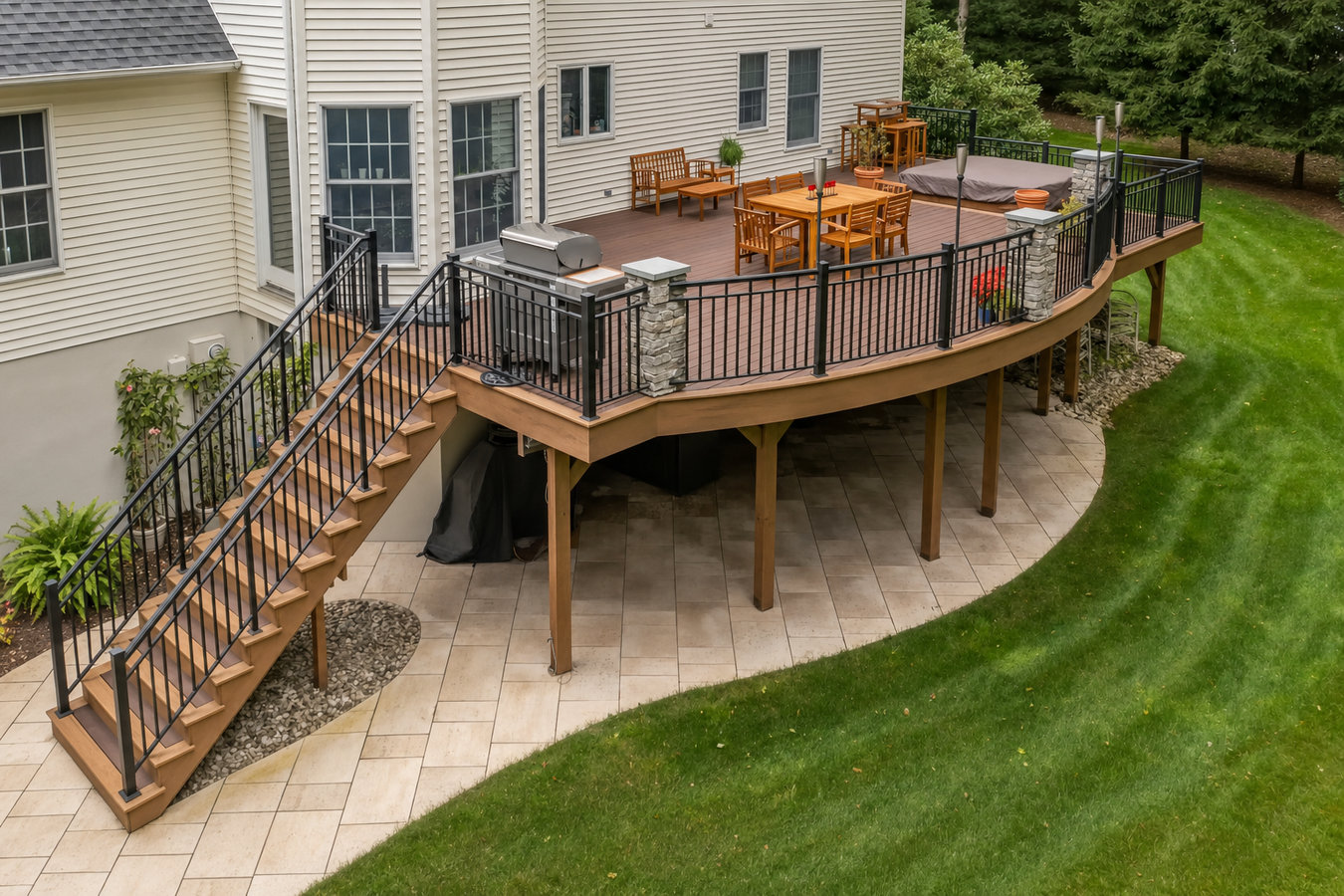
A wobbly or rotted railing is a safety problem and a liability. We install deck railings in Port Orange that pass county inspection and hold up through Florida summers.
Deck railing installation in Port Orange involves removing any existing railing, setting new posts securely into the deck frame, and attaching the top and bottom rails along with the balusters - and most standard residential railing jobs are completed in a single day once the permit is approved.
A lot of Port Orange homeowners put off railing work until a post wobbles noticeably or the wood turns gray and soft. By that point, the deck frame underneath may also need attention before new railing can be safely installed. Florida requires railings to be at least 36 inches tall on decks elevated more than 30 inches off the ground, and the gaps between balusters cannot exceed four inches - requirements that exist because deck falls are one of the most common causes of serious home injuries. If your deck is part of a larger project, pairing railing installation with our multi-level deck work means both the platform and the railing system are planned together from the start.
Every railing installation we do in Port Orange is permitted through Volusia County, built to Florida residential standards, and uses materials matched to the local climate. We check the deck frame at every post location before we start - so you know what you are working with before a dollar changes hands.
Stand at any post and push it firmly side to side. If it moves even a little, the connection between the post and the deck frame has weakened. In Port Orange's humid climate, wood posts can rot from the inside out while still looking fine on the surface - so visible wobble is a sign the problem may be worse than it appears.
Florida's combination of intense sun, heavy rain, and humidity breaks down wood faster than almost anywhere else. If your railing boards have turned gray, developed cracks along the grain, or feel soft or spongy when you press on them, rot has set in. A railing in that condition is no longer reliably safe, and waiting makes the underlying frame damage worse.
If your deck sits more than 30 inches off the ground and has no railing, Florida's building standards require one. This is common on older Port Orange homes where decks were added in the 1980s and 1990s without permits. Beyond the legal requirement, an unguarded elevated deck is a genuine fall risk for children and adults.
Home inspectors in the Port Orange area routinely flag railing deficiencies as safety issues in their reports. A wobbly, rotted, or non-compliant railing can delay closing or give buyers leverage to negotiate your price down. Replacing the railing before you list is almost always less expensive than the concession a buyer will ask for after an inspection.
The material you choose for your railing determines how much maintenance you will do for the next ten to twenty years. In Port Orange's subtropical climate, aluminum and composite railings are the most practical long-term choice - they do not rot, resist the humidity, and hold their color without annual sanding and sealing. Pressure-treated wood sits at a lower price point and looks clean on day one, but it needs regular maintenance to stay that way here. If you are rebuilding or adding a deck at the same time, our custom deck design and build process integrates the railing selection into the overall project design from the beginning.
Post anchoring is where most railing failures start. Posts must be fastened securely into the deck frame itself - not just set on top of it - and the hardware used for those connections needs to be corrosion-resistant for coastal conditions. We check the condition of the deck frame at each post location before any material is ordered, and we tell you what we find in plain language before work begins. If the frame needs reinforcement, we address that first.
Best for homeowners who want a low-maintenance system that holds up in Florida's humidity and salt air without annual upkeep - a strong choice near the coast.
Best for homeowners who want the look of wood without the rot and fading that comes with untreated wood in Port Orange's climate.
Best for homeowners working within a tighter budget who plan to maintain the railing regularly with cleaning and sealing every one to two years.
Best for homeowners who want an open, contemporary look with clear sightlines to the yard or water, with stainless steel cables that resist rust in coastal conditions.
A large share of Port Orange's housing stock was built between the 1970s and 1990s - and deck railings on those homes are now 25 to 40 years old in many cases. Florida's heat, humidity, and annual rainfall break down outdoor wood faster than most homeowners expect, and railings on older Port Orange homes often show rot at the post connections long before the surface boards give anything away. When we assess a railing job on an older deck, we always check the frame where each post attaches - because installing new railing over a compromised frame is the most common mistake contractors make when they do not know the local housing stock. Homeowners in Daytona Beach and in Ormond Beach face the same aging-deck challenge, since the residential build-out in those areas followed a similar timeline to Port Orange.
Port Orange's proximity to the Atlantic coast also means salt air is a genuine factor on many properties near the Halifax River and the Intracoastal Waterway. Standard hardware corrodes in that environment within a few years. We use stainless steel and hot-dipped galvanized fasteners and post connectors on every railing job in this area - the materials that the American Wood Council deck construction guide recommends for coastal and high-humidity environments. Railing permits in Port Orange are processed through Volusia County Building and Zoning, and we are familiar with that process so your project does not sit waiting on paperwork.
We ask a few basic questions about your deck height, how long the railing run is, and what material you are considering. We respond within one business day to schedule an on-site walkthrough at no cost.
We measure the full railing run, check the deck frame at each post location, and note anything that may affect the installation. You receive a written estimate that breaks out materials and labor before you commit to anything.
For elevated decks in Port Orange, we submit a permit application to Volusia County before ordering any materials. This typically takes a few business days to two weeks. We handle all of it - you do not need to contact the county yourself.
The crew removes the old railing, sets and anchors the new posts, then works along the run attaching rails and balusters. Most jobs finish in one day. A county inspector then visits to verify the work meets Florida's standards. We walk you through the finished railing before we leave.
Free on-site estimate. We check the deck frame before quoting. All Volusia County permits handled for you.
(386) 400-1327We inspect the deck frame at each post location during the initial walkthrough and tell you what we find before you sign anything. Older Port Orange homes with 1980s-era wood frames often have hidden rot at the post connections. Installing new railing over a compromised frame is the mistake we will not make.
Homes near the Halifax River, Spruce Creek, and the Intracoastal Waterway are exposed to salt air that eats standard hardware within a few years. We use stainless steel and hot-dipped galvanized fasteners on every railing project in Port Orange - the materials that hold up in this specific environment.
We submit the permit application, coordinate the county inspection, and give you the approved permit paperwork when the job closes. You receive documented proof the railing was built to standard - which protects you at closing if you ever sell.
Many Port Orange communities near Spruce Creek, Waters Edge, and similar planned neighborhoods have HOA requirements governing railing style and color. We are familiar with these community standards and will help you confirm approval before a single piece of material is ordered.
Railing installation looks straightforward from the outside, but the details that determine whether it is safe and durable - post anchoring depth, hardware grade, frame condition - are not visible once the job is done. Our approach is to surface those details before work starts, so you are making an informed decision rather than finding out about problems after the invoice is paid.
If your deck itself needs replacing, a full custom design process starts from your yard conditions and how you plan to use the space.
Learn MoreMulti-level deck projects that need railing on every platform - planned together so the railing system works across all levels from day one.
Learn MoreSpring slots fill fast - lock in your date before hurricane season arrives and availability tightens.